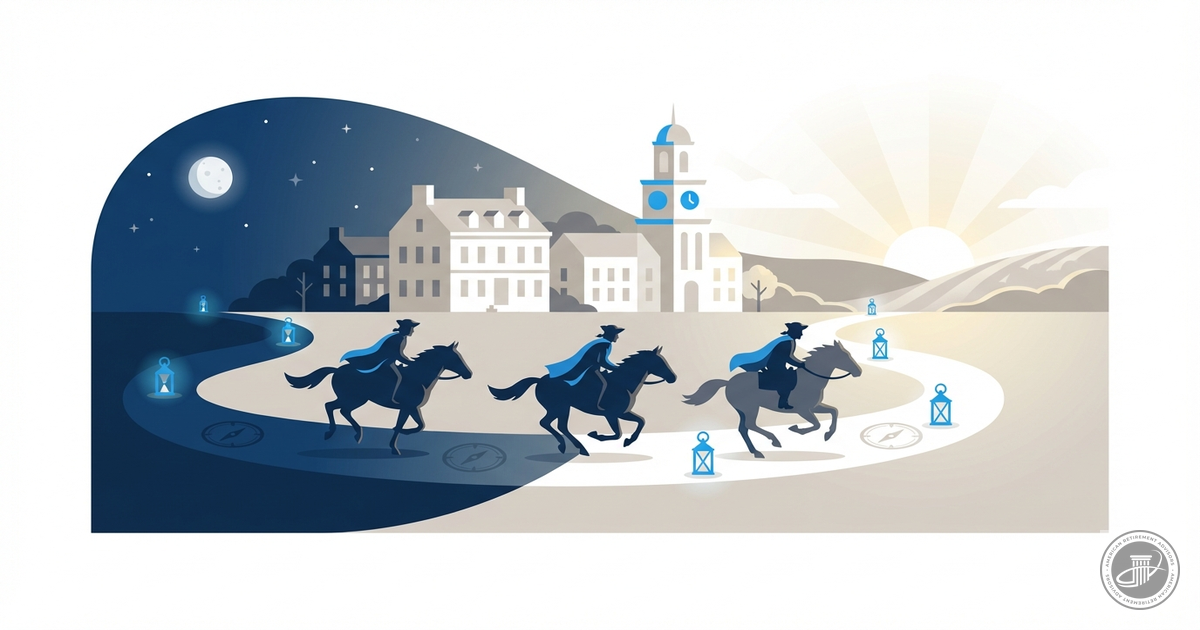
This month, we celebrate our great country. I find that reflecting on how we got here and some heroes that helped us achieve independence is fascinating to learn about. Today I am reflecting on one important communication tool used during the American Revolution—the importance of the colonial riders, alerting the early Americans of what dangers lay ahead.
School-age children used to learn the rhyme by the American poet Longfellow of Paul Revere's Midnight Ride, warning the patriots of the impending advent of the British forces. Most people attribute the warning to only Paul Revere, as does this poet:
"Listen my children, and you shall hear
Of the midnight ride of Paul Revere…"
But… did you know other riders were as pivotal in delivering the historical warning? There were two other riders with Paul Revere. The three started out together and had to split up after being discovered by a patrol of British officers. The other two riders with Revere were:
The Other Midnight Riders
William Dawes warned of the British coming, and while on his route to Concord, he was thrown by his horse and had to walk back to Lexington.
Samuel Prescott was the one who actually made it to Concord with the warning. (Revere was captured by the British, Dawes was thrown off his horse, and Prescott was the lone messenger to make it out of the three.)
Other notable colonial riders included:
Israel Bissell, another rider who rode further than the others for a total of 345 miles warning militias along the way. He rode so hard that he killed his first horse.
There was one more rider who is almost unknown if it were not for her father. Yes, it was sixteen-year-old Sybil Ludington who, with Colonel Henry Ludington's blessing, rode to warn of the coming British. Her father had complete confidence that she could accomplish the ride and she actually outperformed Paul Revere's twenty-mile ride for a forty-mile ride arriving back at home at dawn exhausted but successful. She was later commended by none other than General Washington.
While we have our heroes, some are unsung. And now you know there was more than one. Happy Fourth!!
By David Edge
David Edge is a retirement lifestyle writer and contributor to the ARA monthly newsletter. His articles blend personal stories with practical insights on living well in retirement.
You Might Also Like
- July 4th: Surprising Facts About Independence Day You Probably Didn't Know
Lifestyle & Mindset · David S. Edge - Songs of Patriotism: American Music That Unites Us
Lifestyle & Mindset · David S. Edge - Fun 4th of July Facts You Probably Didn't Know
Lifestyle & Mindset · David S. Edge
Easy Eddie's Take
David's story about these brave colonial riders reminds me of something important for all of us today. Just like those riders had to plan multiple routes and backup messengers to get their crucial message delivered, we need backup plans for our retirement too. Think of it this way: Paul Revere might get the fame, but Samuel Prescott actually completed the mission because they had a solid plan with multiple riders.
When it comes to your retirement income, you don't want to rely on just one "rider" either. Social Security Administration benefits might cover about 40% of your pre-retirement income, but that leaves a pretty big gap. That's where your 401(k), traditional IRA, Roth IRA, and other savings need to pick up the message and carry it forward. The current 401(k) contribution limit for 2026 is $24,000, plus a $8,000 catch-up contribution if you're 50 or older.
Just like Sybil Ludington's 40-mile ride that outperformed the famous 20-mile one, sometimes the less famous financial strategies work harder for you. A little preparation today with multiple income sources can make sure your retirement message gets delivered successfully.