
Many people spend decades protecting a pile of money without deciding where it goes. This last part of our series on David's guide is about that question, because the way an IRA passes to the next generation can hand your family a tax bill you never intended.
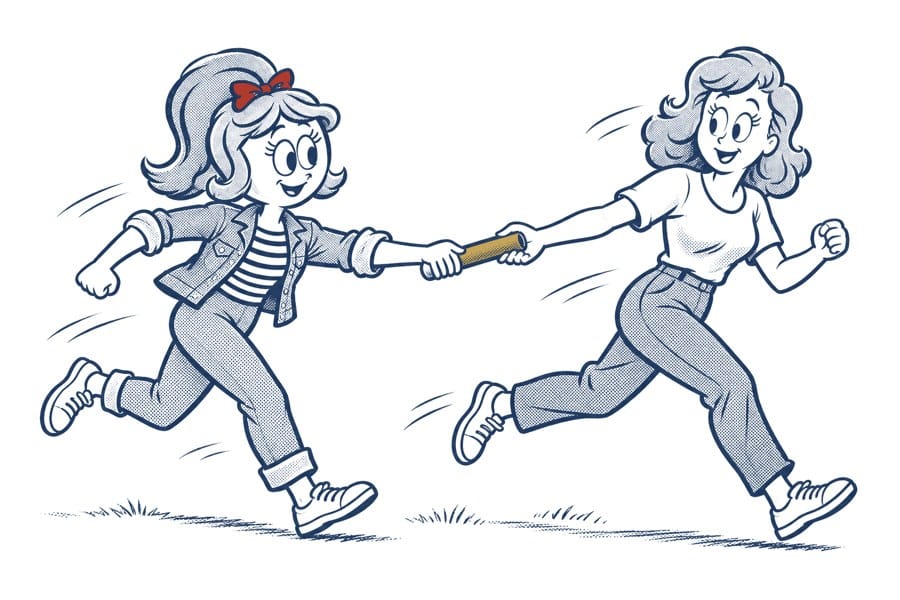
What happened to the stretch?
Children who inherited an IRA used to be able to stretch withdrawals over their own lifetimes. For most heirs of owners who died after 2019, that's over.
Under the SECURE Act, most non-spouse beneficiaries must empty an inherited IRA by the end of the tenth year after the owner's death. Inherited Traditional money is taxed to them as they take it out, and for many heirs, those ten years fall during their highest-earning years.
Who can still stretch?
- A surviving spouse, who has the most options, including treating the IRA as their own.
- The owner's minor child, until age 21. The 10-year clock starts then.
- A disabled or chronically ill beneficiary.
- Someone not more than 10 years younger than the owner.
What detail do most families miss?
If the owner had already started RMDs, most heirs on the 10-year clock must also take a withdrawal every year, in years one through nine, and empty the account in year ten. They can't simply wait and take it all at the end. Final IRS rules in 2024 confirmed those yearly withdrawals, with penalties for missing them beginning in 2025.
Where does a Roth fit?
A Roth IRA has no required withdrawals during the original owner's lifetime. The tax was paid on the way in, so the government has nothing to wait for. Since 2024, the same is true of Roth accounts inside workplace plans, like a Roth 401(k) or Roth 403(b).
For your heirs, a Roth is generally tax-free to them, though it still runs on a 10-year clock. That's why some planning in the years before RMDs begin is about moving money on purpose from the taxed-later side to the never-taxed-again side, through Roth conversions.
A conversion is taxable in the year you make it, so it's a trade, not a free pass. And any year's RMD has to come out before anything can be converted.
Where does this money go?
If you don't need your RMDs to live on, it's worth asking who the money is for. The decisions that change the outcome are made ahead of time, not the year the first notice arrives:
- Naming beneficiaries on every account, and checking them after a marriage, divorce or death.
- Deciding whether Roth conversions make sense before RMDs begin.
- Timing withdrawals around your tax bracket and the Medicare income lines.
- Giving to charity from the IRA instead of from your checking account.
As David puts it, the back half of the deal is where the planning lives.
The whole series in one place
- Part 1: Why do they make you take the money out?
- Part 2: When do your RMDs start?
- Part 3: How much do you have to take out?
- Part 4: What if you miss an RMD?
- Part 5: Can an RMD raise your Medicare premiums?
- Part 6: Is there a smarter way to give?
David's guide, The Hidden History of the Rule That Taxes Your Retirement, ends with a one-page RMD readiness checklist you can print and work through. The rule isn't going anywhere. The surprise is optional. And if you'd like to see how the pieces connect for your family, alongside your tax professional, you can begin the conversation here.
This is Part 7 of The Rule That Taxes Your Retirement, a seven-part series from David Schaeffer's guide. For education only. Not tax, legal or investment advice.
Disclaimer: The information in this article is for educational purposes only and does not constitute tax, legal, or investment advice. Tax laws change frequently, and individual circumstances vary. American Retirement Advisors does not provide tax or legal services. Before making any tax-related decisions, consult a qualified CPA, tax attorney, or financial planner who can evaluate your specific situation.