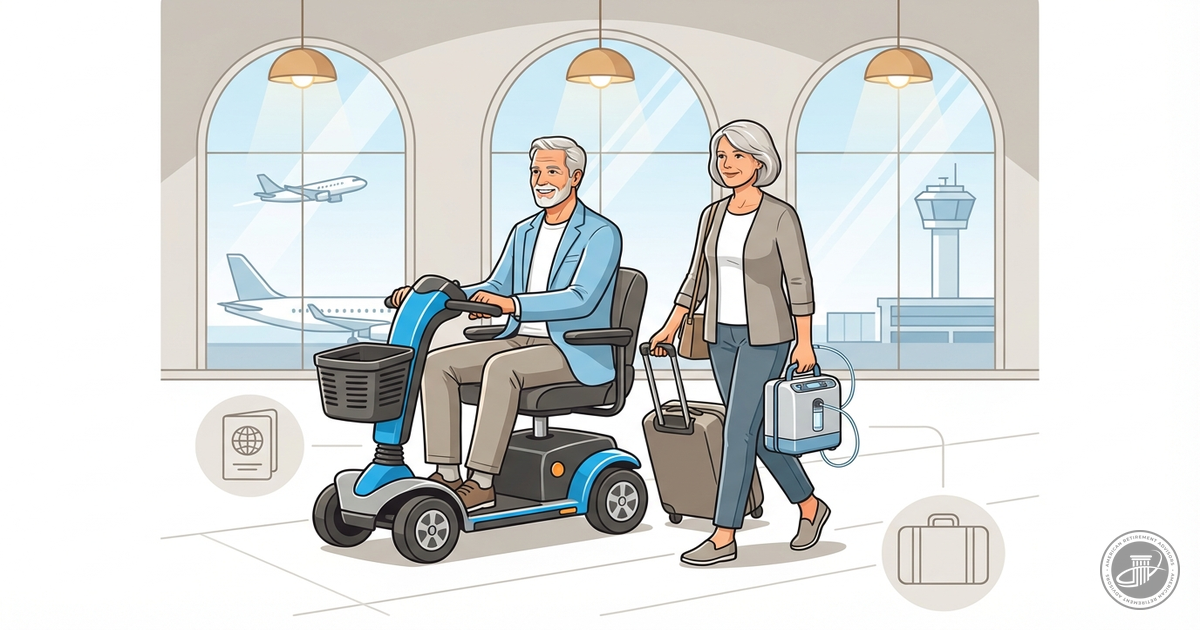
Lidia called our office to ask if we could assist her with some basic questions about purchasing and traveling with medical equipment. Whether you need equipment temporarily or for the long haul, there are a few key things to keep in mind, which we shared with Lidia.
First, if you are purchasing the equipment, is it something covered by Medicare or your Medicare Advantage plan? If so, you should make your purchase through a Medicare-approved durable equipment provider. In many cases, the provider will assist you with the paperwork. In other cases, you will need to fill out the forms, provide the bill you paid, and submit it to Medicare to be reimbursed.
Then, we provided answers about traveling with medical equipment. When traveling by car, your equipment goes with you, so no worries. But when flying, cruising, or traveling by rail, there are other considerations. You want to check with the airline you use for a list of prohibited items. There are all kinds of batteries for medical equipment, and this is one of the items to be particularly concerned with, as many types of batteries are prohibited on airlines. And while you can take an oxygen concentrator onboard with the proper battery, you cannot take a compressed air tank.
Airlines do not charge extra fees for medical equipment during travel. However, if you plan to bring something large, such as a motorized scooter or wheelchair, it's best to notify the airline at least 48 hours in advance. This allows them to make the necessary arrangements and ensures a smooth travel experience. And remember, always check if the battery is allowed.
Lidia thanked us for the helpful tips, which saved her time and potential headaches! Got questions? Give us a call—we're always here to help!
By David Edge
David Edge is a retirement lifestyle writer and contributor to the ARA monthly newsletter. His articles blend personal stories with practical insights on living well in retirement.
You Might Also Like
- Success Story: When Medicare Emergency Coverage Saved the Day
Success Stories · David S. Edge - Success Story: One of Each Please! Veteran Combines VA and Medicare
Success Stories · David S. Edge - Mom and Dad: A Medicare Emergency That Became 123 Easy
Success Stories · David S. Edge
Easy Eddie's Take
David's experience with Lidia is something I see all the time. Most people are surprised when they learn that Medicare Part B covers 80% of approved durable medical equipment costs, like wheelchairs, walkers, and oxygen concentrators, but only when you use a Medicare-approved supplier. The Centers for Medicare & Medicaid Services maintains a list of approved suppliers, and this matters because using a non-approved provider means you could pay full price out of pocket.
Here's the good news about travel: the Transportation Security Administration has clear rules for medical equipment that make things easier than you might think. Lithium-ion batteries under 100 watt hours are generally allowed in carry-on bags, and most portable oxygen concentrators fall within this limit. A lot of people ask me, "Can I bring my CPAP machine on the plane?" Absolutely yes, and it doesn't count toward your carry-on limit either.
One tip that saves headaches: if you're on Medicare Advantage, call your plan's member services before purchasing equipment. Some plans have preferred suppliers or require prior authorization for certain items. That little call can save you hundreds of dollars and make sure everything goes smoothly.