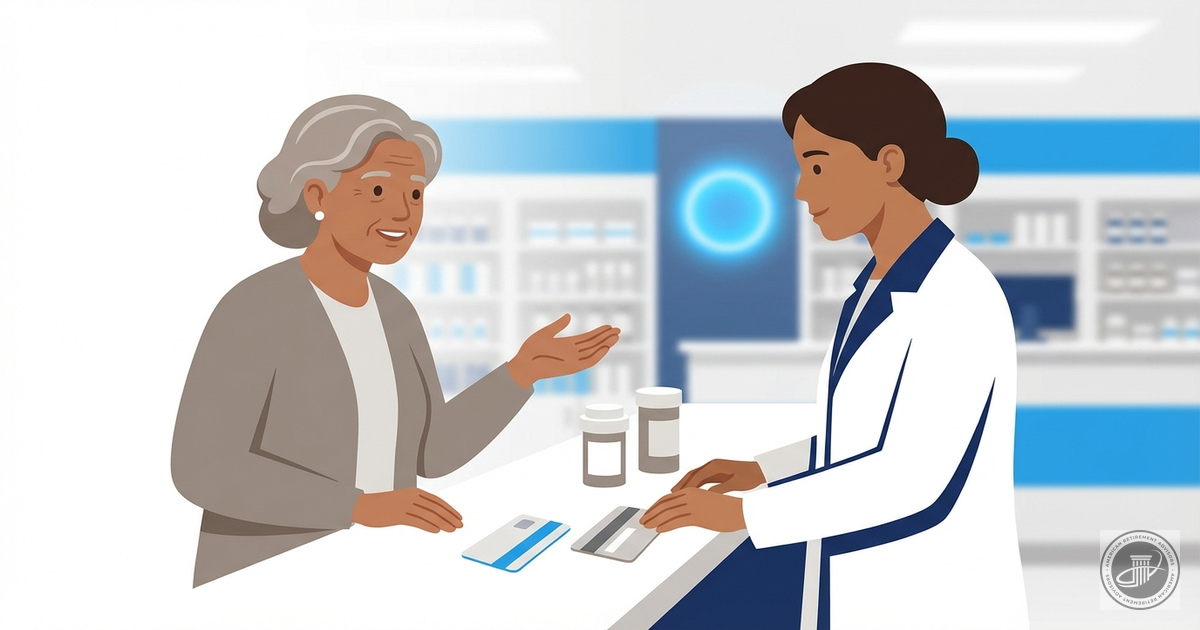
It's the time of year when we reach out to you, our clients, and ask you to update your prescription medication list so we can verify that your medications are still covered under your plan for next year and make sure that your plan is still cost-effective. Some of you ask us... 'Why do I need a drug plan when I fill most of my medications with a discount card (like GoodRx or SingleCare)? Maybe I should just cancel my drug plan.'
Here are a few reasons why you shouldn't do that...
No Guarantees with Discount Cards
- There will be a $0 premium drug plan available in many states.
- No Guarantees... Your pharmacy could choose to stop taking your discount card. Your drug pricing is not guaranteed – drug prices can change daily. Your $20 drug could be $40 next month. The drugs they offer at a discount are negotiated and can change.
- Fine for Generics but not Brands... Maybe you are only taking generic medications right now, but you have a health event and end up with an expensive brand medication like Eliquis. Your cost under a discount card is $500-$600 per month... PER MONTH! YIKES....
Penalties and Restrictions
If you leave your drug plan, you can only re-enroll during the annual election period which runs from Oct. 15th- Dec. 7th. If you need one sooner due to being prescribed an expensive brand medication, you are out of luck and will be paying cash for that expensive drug until you can get enrolled again. Also, the government will penalize you for not having a Part D drug plan when you were eligible for one. So, let's say you drop your drug plan and wait 24 months before getting a new one – you will pay a 24% penalty on your new drug plan for the rest of your life – THE PENALTY NEVER GOES AWAY!
If the national base Part D premium is around $35-40 (typical current range), your penalty would be $8-10 per month. If your drug plan is $12 per month next year, you would be paying just over $20 per month due to the late enrollment penalty. If you live 20 more years in this scenario, you are paying $2400+ in penalties.
If you don't take very many drugs or if the drugs you take are less expensive through a discount card, then you need to choose a very inexpensive drug plan so you can avoid the Late Enrollment Penalty.
Or.... You may not be filling at a 'preferred pharmacy' for your plan which means that you will have higher costs, which may lead you to turn to a discount card, but your drugs may have a $0 copay or a lower copay at a preferred pharmacy.
Not sure what is most appropriate for you, leave it to us, the experts, at American Retirement Advisors to make choosing your drug coverage 123Easy!
By American Retirement Advisors
American Retirement Advisors helps retirees and pre-retirees navigate Medicare, estate planning, and retirement income — so you can enjoy the retirement you've earned.
You Might Also Like
- Did Your Prescription Price Just Double or Quadruple? Here's Why
Medicare & Healthcare · Tammy Semler - Prolia and Injectable Medications: Medicare Coverage Money-Saving Tips
Medicare & Healthcare · Sharon Groves - Did You Delay Part B? Then Watch for This Letter
Medicare & Healthcare · Tammy Semler
Easy Eddie's Take
The article hits on something really important here about Medicare Part D penalties. Let me break down exactly how the Medicare Part D late enrollment penalty works in 2026. The Centers for Medicare & Medicaid Services calculates your penalty by taking 1% of the national base beneficiary premium for each month you went without creditable prescription drug coverage. That penalty gets added to your monthly premium for as long as you have Medicare Part D coverage.
A lot of people ask me, "Can I use GoodRx instead of Medicare Part D and avoid the premium?" Here's the thing – GoodRx and similar discount programs don't count as creditable coverage under Medicare rules. So even if you're saving money today on generic drugs, you're setting yourself up for that lifetime penalty. Plus, if you end up needing an expensive brand-name medication like Eliquis for blood clots or Jardiance for diabetes, those Medicare Part D plans have annual out-of-pocket maximums that protect you. In 2026, that maximum is $2,000 per year. With a discount card, there's no cap on what you might pay.
The good news is that many Medicare Part D plans have $0 monthly premiums, and the Annual Open Enrollment Period from October 15th through December 7th gives you a chance to compare all your options. A little planning now can save you thousands later, and that's what makes smart Medicare choices 123easy.