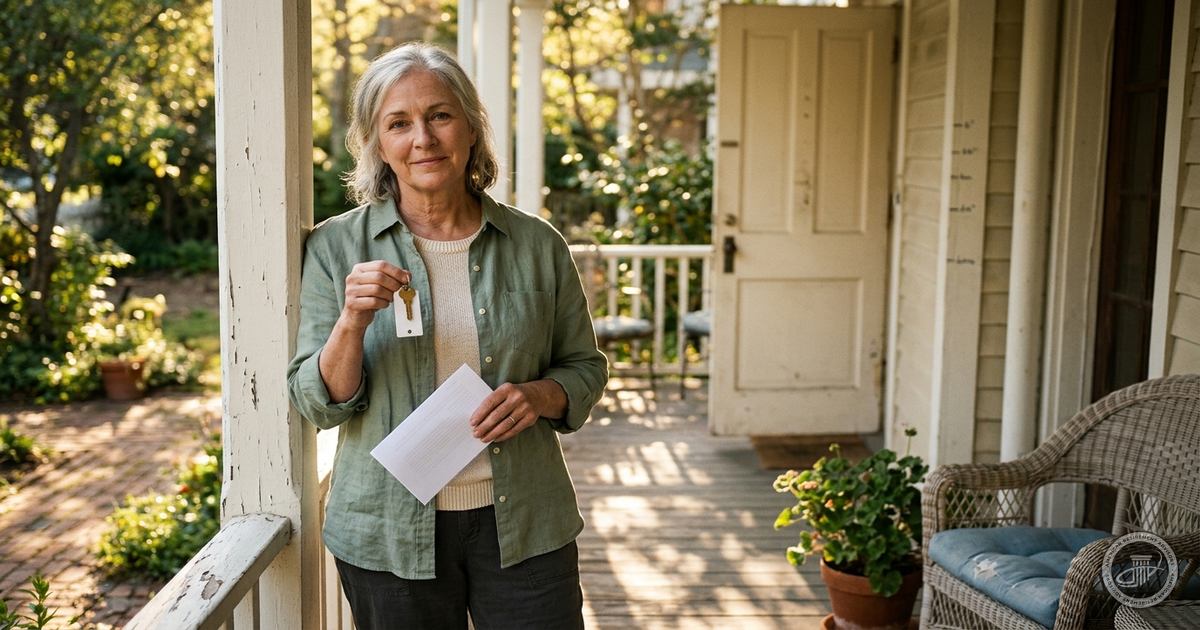
There is a kitchen your kids can walk through in the dark. They know which stair creaks. They know where the pencil marks on the door frame stopped climbing. Someday that house will be theirs, and in the first month they own it, a stack of paperwork they have never seen will matter more than the thirty years of memories they have.
Day three of our week on the receiving end of inheritance. Yesterday was the IRA. Today is the house, and the news here is genuinely better, if the paperwork is right.
The quiet gift buried in the tax code
Say you bought your home decades ago for $180,000 and it is worth $780,000 today. If you sold it yourself, a chunk of that gain could be taxable. But when your kids inherit it, something remarkable happens: for tax purposes, their cost basis generally resets to the home's value on the day they inherit it. The $600,000 of gain that built up during your lifetime is simply never income-taxed to anyone. If they sell the house soon after, there is often little or no capital gains tax at all.
This is called the step-up in basis, and it applies to more than the house. A brokerage account of stock you have held for thirty years gets the same reset. It is one of the most generous provisions in the entire tax code, and it is the reason yesterday's article said after-tax assets land light while pre-tax IRAs land heavy. Your kids' tax picture depends enormously on WHICH dollars they inherit, not just how many.
The Arizona and Nevada advantage
Here is the part national articles routinely miss. Arizona and Nevada are community property states. When the first spouse passes, property held as community property generally receives a step-up on the ENTIRE asset, both halves, not just the half the deceased spouse owned, which is how it works in most other states. A surviving spouse in Scottsdale or Las Vegas can end up with a fully refreshed basis on the family home and on community investments, years before the kids ever inherit. Married couples who moved here from a common-law state and never retitled what they brought with them are often sitting on this advantage without having claimed it. It is a title question, and title questions have twenty-minute answers when someone actually asks them.
The deed that skips the courthouse
Arizona also offers a beneficiary deed: a simple recorded document that says who receives your home when you pass, automatically, without the house going through probate. It is revocable, you stay in full control for life, and it spares your kids months of court process at the exact moment they have no bandwidth for it. Nevada has a similar tool. For many families it is the single highest-leverage twenty minutes in this entire series.
One caution from the files: paperwork drifts. We have seen a client call about a deed she set up years earlier, unsure whether it still said what she meant it to say after a daughter's divorce and a grandchild's arrival. And during the refinance wave a few years back, more than a few families quietly undid their own trust planning when the lender retitled the house and nobody put it back. If you have refinanced since setting up a trust, that is worth a look this month, not someday.
Three kids, one house
Now the human part. A house does not divide by three. When siblings inherit a home together, they inherit a partnership none of them chose: one wants to keep it, one wants to sell it, one wants to rent it out, and all three are grieving. Some of the hardest family fractures our advisors have witnessed started as real estate questions.
And it compounds. One widow we know inherited seven rental properties with no structure around them at all, no entity, no manager, no instructions. What was meant as an engine of income arrived as a second job she never applied for.
If the plan is for one child to have the house, say so, in the documents and out loud, and think about how the other kids are made whole. Sometimes that is other assets. Sometimes a permanent life insurance benefit is the cleanest equalizer, precisely because it arrives income-tax free and divides to the penny. What does not work is silence and hope.
The pattern, again
Notice the theme of this whole week so far. The IRA outcome was decided by when the money moved. The house outcome is decided by titles, deeds, and a conversation. None of it is decided by the size of the estate. The handoff is the plan, and the person who controls the handoff is you.
Deeds, titles, and who-gets-the-house conversations are exactly the kind of thing that gets organized, on paper, in the BeneficiaryBox program, where the Green section exists precisely so your kids are never guessing what the paperwork says. Tomorrow's article is the story of that program and the thirty days your family will be glad you read it.
See you tomorrow for the folder.
Disclaimer: The information in this article is for educational purposes only and does not constitute tax, legal, or investment advice. Tax laws change frequently, and individual circumstances vary. American Retirement Advisors does not provide tax or legal services. Before making any tax-related decisions, consult a qualified CPA, tax attorney, or financial planner who can evaluate your specific situation.