
Happy Halloween. Somewhere tonight, a bowl of candy is waiting by the front door, and a few of us will sneak more than our share. So it feels like the right day to talk about teeth.
Many Medicare Advantage plans include dental. It can be a valuable benefit, and it can also go unused, because each plan's dental works a little differently. This week we've covered what Medicare pays for, discount plans versus dental insurance, and where to find care for less. Today is for anyone whose plan already includes dental: how to find out what you actually have.
Which papers do you need?
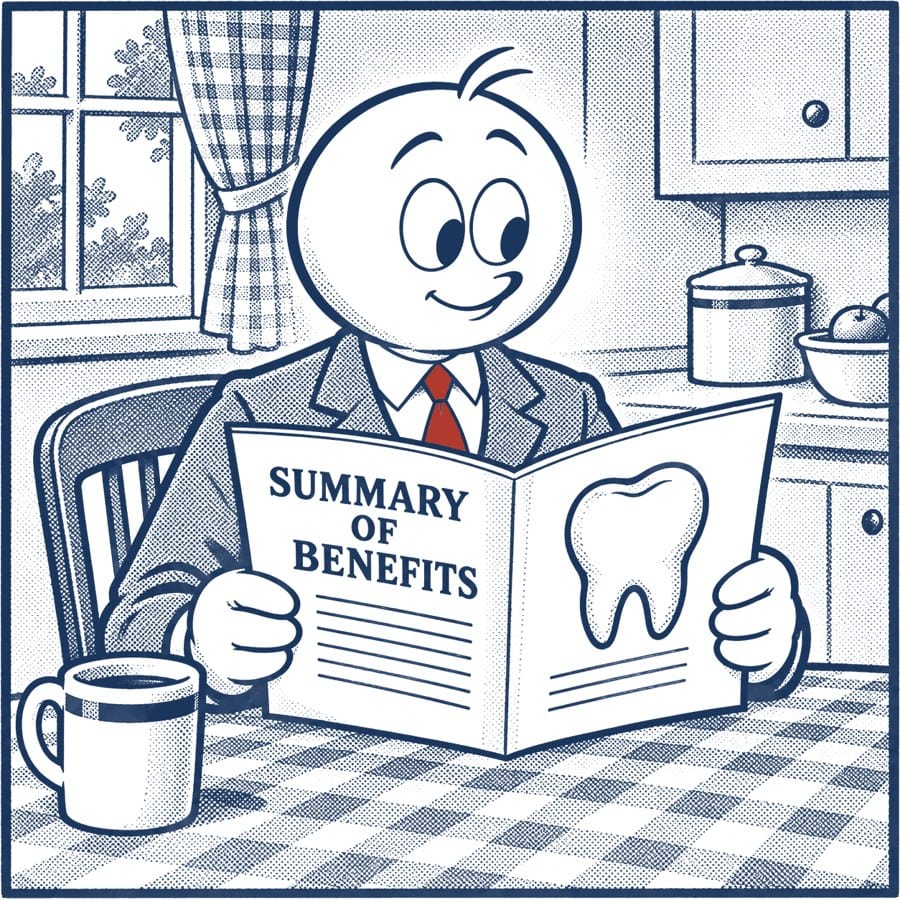
- Summary of Benefits. A short overview of what the plan covers and costs. You likely got it when you enrolled.
- Evidence of Coverage. The full rulebook for your plan. Plans must send it to members by October 15 each year, often as a link or a notice of where to find it.
- Annual Notice of Change. Arrives by September 30 and lists what changes next year, including dental.
Can't find them? Call our client care team at (602) 281-3898 and we'll help you track them down.
Where is the dental section?
In the Summary of Benefits, look for a section called "Dental," "Dental services" or "Dental coverage." It's often next to vision and hearing, and sometimes marked with a little tooth.
Here is a made-up example of what it can look like. This is not a real plan, and every plan's layout is different:
- Preventive dental: $0 copay for oral exams, cleanings and X-rays, up to 2 per year in network. 20% coinsurance out of network.
- Comprehensive dental: $0 copay for fillings, root canals, extractions, crowns, dentures and implants in network. 20% coinsurance out of network.
- Annual maximum: $2,500 combined for preventive and comprehensive services, through the plan's dental PPO network. Out of network, you pay the dentist and request reimbursement.
What do "preventive" and "comprehensive" mean?
Different things in different plans. Look past the labels for the specific services: periodic oral exams, cleanings, X-rays, fillings, crowns, bridges, root canals, extractions, dentures, implants. If a service you need isn't listed, check the Evidence of Coverage before you assume it's covered.
What limits should you look for?
- How often. For example, two cleanings a year, or one set of X-rays every few years.
- Dentures and implants. These are the services most often limited or left out. If they matter to you, find exactly how your plan treats them.
- Cosmetic work. Whitening and similar procedures are generally not covered.
- Built in or optional. Some plans include dental for everyone. Others offer richer dental as an option for an added monthly premium.
In our made-up example, the comprehensive line lists dentures and implants, so that plan covers them, up to the $2,500 yearly maximum.
How is the dental covered?
Your Summary of Benefits will use one or more of these designs:
- Dental PPO. You can usually see any dentist, but in-network dentists cost less and bill the plan directly. Out of network, you may pay up front and send in the paperwork for reimbursement.
- Dental HMO. You must use the plan's network. Expect set copays, often $0 for cleanings and X-rays and higher for major work like root canals or crowns, and limits on how many services are covered.
- Allowance. The plan sets aside a dollar amount each year for dental care, and you use it for covered services until it runs out. Some allowances work only in network or pay more there.
And a few cost terms: the annual maximum is the most the plan pays for dental care in a calendar year, and after that you pay. A copay is a flat amount, like $0 for a cleaning. Coinsurance is a percentage you pay, like 20% out of network.
Is the dental really part of your plan?
Yes. Dental in a Medicare Advantage plan is one of the plan's extra benefits, and the plan is responsible for it. Many plans hire a dental company to run it, so your dental care may come with its own network, phone number and website, separate from your medical benefits.
Tomorrow, in the last part of this series: where you can get your care, and whether you can see a dentist who doesn't take Medicare.
The full walk-through, with the made-up plan explained line by line, is in our guide, Dental Care in Retirement. And if you'd like someone to read your plan's dental section with you, call us at (602) 281-3898.
This is Part 4 of Dental Care in Retirement, a five-part series from our newest guidepost. For education only. Not a recommendation of any plan, company or clinic.
Disclaimer: This article is for educational purposes only. It is not sponsored, endorsed, or otherwise representative of Medicare or the federal Medicare program. American Retirement Advisors is not a government agency. For official Medicare information, visit medicare.gov or call 1-800-MEDICARE (1-800-633-4227).