You don't start it as a hard conversation. That was the lesson from yesterday's Fiscal Fridays, my dad's live monthly show at the American Retirement Advisors studio in Scottsdale. The theme was the family meeting, and the room was full.
Thanksgiving is five days away. Here is what came out of the show, in three steps: go sideways, ask what they want, and be the one who goes first.
What happened at Fiscal Fridays?
My dad opened with a question and asked everyone to answer it in their head: "What's the hard conversation you need to have with someone you love?"
He talked about how people usually try. They bring it up in the car, where nobody can get out. They hint, and then quickly change the subject. They tell one kid and figure that kid will tell everybody else.
There were games, too. There was a wheel with words on it, and the panel had to say out loud whether they had done what they tell everyone else to do. One answer on final wishes: "We are 85% there." One Apple ID turned out to be kept "in my phone, in the notes." One said every password is saved in his phone, and the phone opens with his fingerprint. The room laughed.
In another game, everyone in the room held a hand up and put it down question by question, with a pumpkin pie on the line. More people stayed in than expected. Somebody said, "I think we need a few pies."
Near the end my dad pointed out that three people who do this for a living had just admitted, in front of the room, what they have and haven't finished in their own homes. Then he said: "Nobody up here is ahead of you."
What are the three steps?
Go sideways, ask what they want, and be the one who goes first.
Step one: what does "go sideways" mean?
My dad said the families who pull this off almost never do it by sitting everybody down and saying, "I have something serious to talk about." His words: "They do it sideways." Sometimes they turn it into a game.
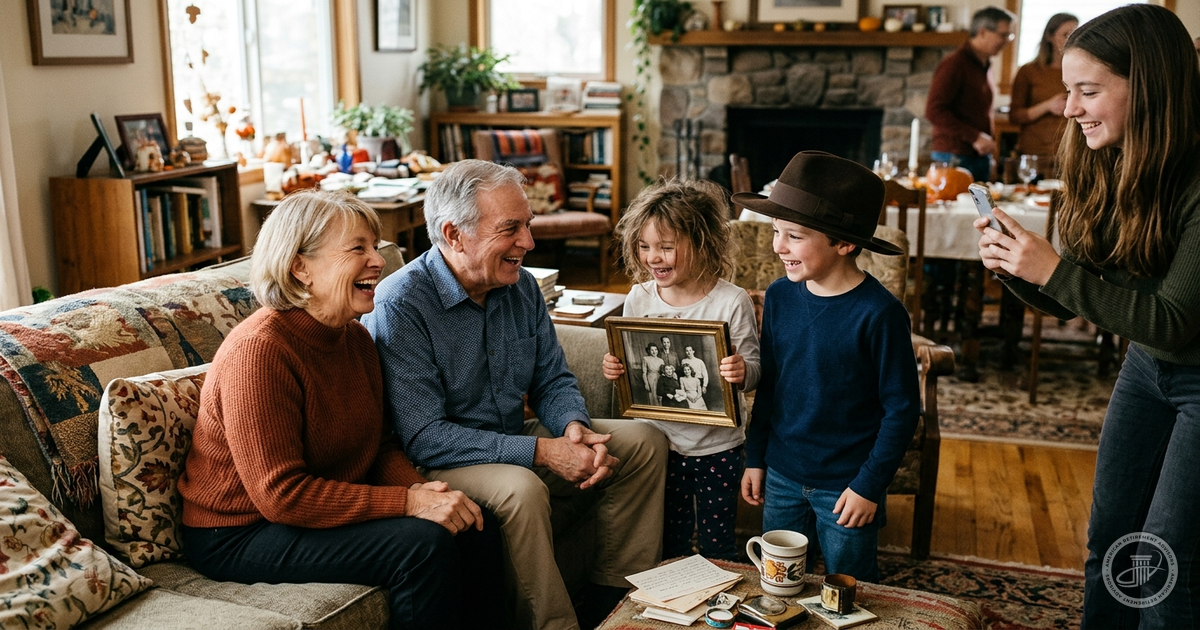
Everyone in the room got one as a handout: a scavenger hunt to play with the family at Thanksgiving. It works for any age. Here are the jobs, as they were described on the show:
- The finders have the list and go find the things.
- The moody teenager who wants nothing to do with anybody documents it with a phone.
- The grandparents and older parents sit, watch, and tell the stories.
The list has things like the oldest photo in the house, a hat, and a recipe somebody wrote by hand. About each one you ask: "Why is that important? What's that for?" My dad said that opens up the bigger conversation about who really wants what.
The game is on our website as the Thanksgiving Treasure Hunt, a game card you can print, front and back. It has twelve treasures and takes about twenty minutes to play. The page says: "Points do not matter. Getting somebody to tell the story is the whole game."
Step two: how do you know what your family wants?
You ask. One of our advisors told this story in a short video played at the show.
When his grandparents died, the grandkids all got to pick something. The others looked at things like a watch and a brooch. He didn't want any of that.
His grandparents still had a well on their farm. When you were working outside and got hot and thirsty, you went to the well. Hanging on the well, on a rusty nail, was a dipper. You pulled up a bucket of water, ice cold, stuck the dipper in and took a sip.
He wanted that dipper. "It just symbolized family to me," he said.
His point: you would be surprised what is important to your family. Ask them before you start deciding who gets what.
My dad put it this way at the show: "It's not the dough. It's the conversation."
Isn't the paperwork enough?
No. My dad's words: "A document is a document. It's not a conversation."
He said the paperwork is only about ten percent of it. The other ninety percent is whether anybody in the family knows it exists, where it is, and what you actually want.
If you already have your papers in a big folder, he had a message for you: "You're not behind, you're actually ahead." He added that those are also the people most likely to think they're finished.
Step three: what do you say to go first?
My dad said that in every family he has watched get this right, one person went first. In every family he has watched get it wrong, everybody waited. Everybody was polite. Everyone assumed someone else would start.
He gave the words to say on Thursday, after everybody eats:
"This has been on our minds. We've been getting our things in order. And we want to share with you what we found, and what we still need help with. We want to do this while we're all together."
Then he said: "That's it. That's the hard part."
Why Thanksgiving? The hard part is usually getting grown adults from different parts of the country into one room on one day. On Thanksgiving, the calendar has already done it.
What do you say if it goes wrong?
Here is what to say:
- If somebody gets upset: "Let's take a break. We don't have to settle this today."
- If someone starts dividing things up: "Let's hear what each of you hopes for first, and we'll decide together."
- If someone says, "I don't want to talk about this": "Then let's just show you where everything is, and that's enough for today."
How do Eddie and Betty handle it?
Eddie and Betty are the hosts of our podcast. They're fictional, and their own family meeting is the morning after Thanksgiving.
In the episode that goes with this article, Eddie says he would have sat everybody down and announced something serious. Betty tells him what the show said: "They do it sideways." When Eddie hears "game," he wants to make the list tonight, with tabs.
Tonight they say the words from step three out loud to each other once, so the first time isn't in front of their kids. Each of them also guesses one thing in the house the kids want. Eddie guesses the file drawer. Betty says nobody wants the file drawer.
What can you do tonight?
Do what Eddie and Betty do. Say the words from step three out loud once, starting with "This has been on our minds."
More questions about the family meeting: How do you run a family meeting?, Could your spouse pay the bills without you? and When is the right time to talk to your kids about inheritance?
To everyone who filled the room yesterday: thank you for coming. As my dad said at the end, "Go home, eat too much, and be the person that goes first."
For education only. Not legal or tax advice.
Disclaimer: The information in this article is for educational purposes only and does not constitute tax, legal, or investment advice. Tax laws change frequently, and individual circumstances vary. American Retirement Advisors does not provide tax or legal services. Before making any tax-related decisions, consult a qualified CPA, tax attorney, or financial planner who can evaluate your specific situation.