From The American Retirement Advisor
Sugar Smarts
Monthly guidance for better diabetes management

Kyle Jacobs
Just like you, Kyle's living with it too.
Kyle is a diabetic. He monitors his glucose daily, watches what he eats, and knows firsthand that managing diabetes is about making better decisions, not perfect ones. Each month, he shares a recipe that works for him.
November 2026 Recipe
Roasted Butternut Squash and Chicken Curry
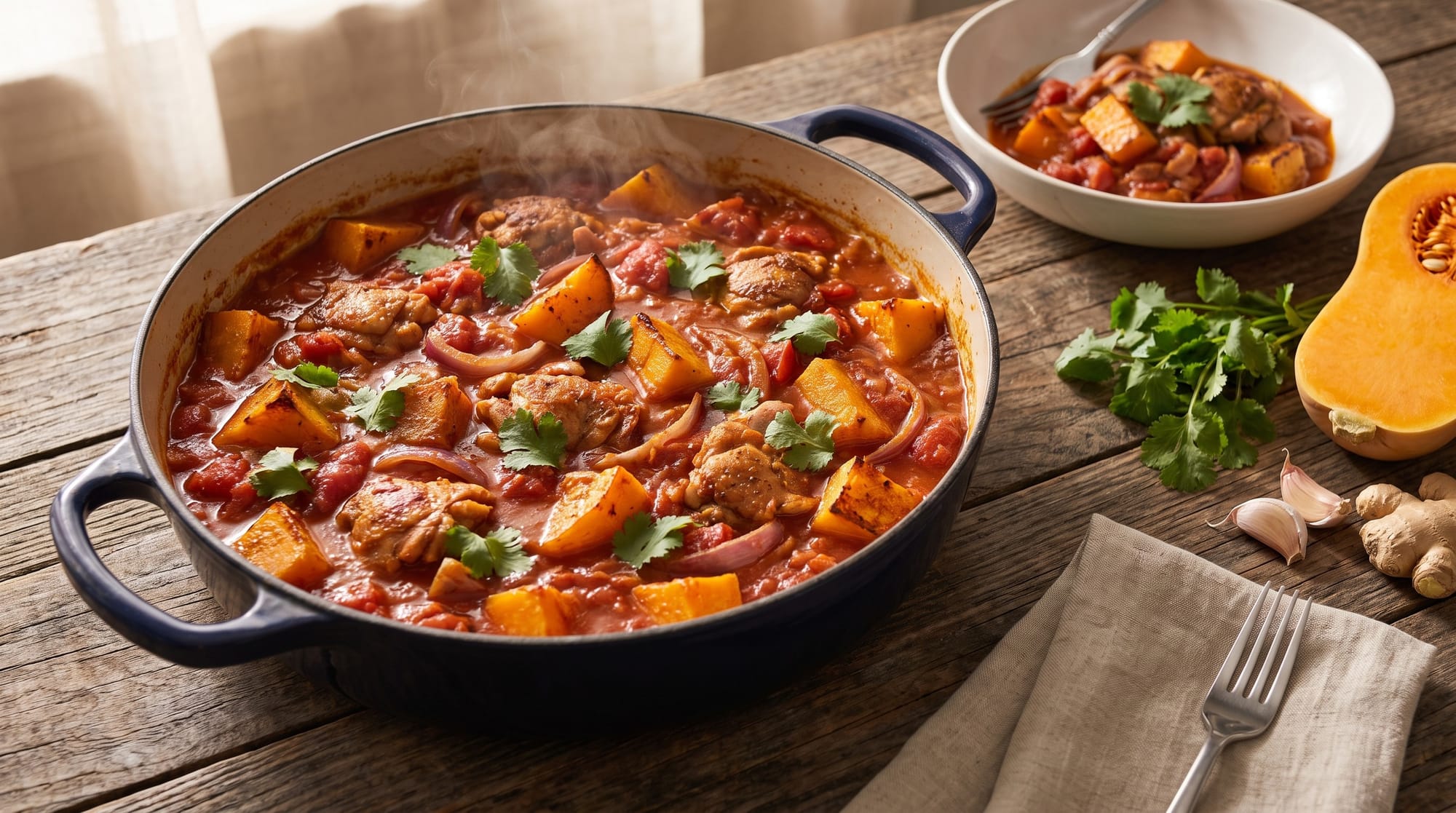
Photo: Eddie for ARA | Recipe: Diabetes UK, selected in partnership with Slimming World
Carbs
19g
Protein
37g
Fiber
5.6g
Ingredients
Roasted Squash
- 1 butternut squash, halved, seeds scooped out and cut into wedges
- Low-calorie cooking spray (an olive oil spray works)
Curry
- 1 red onion, thinly sliced
- 1 tbsp garam masala (see the label tip below)
- 1/2 tsp mild chili powder
- 3 garlic cloves, crushed
- 1 piece fresh ginger, about 1 1/4 inches (3 cm), peeled and finely grated
- 2 cans (about 14 oz / 400 g each) chopped or diced tomatoes
- 1 2/3 cups (400 ml) water
- 1.1 lb (500 g) boneless, skinless chicken thighs, visible fat trimmed, cut into chunks
To Finish
- Black pepper, to taste
- Fresh cilantro (coriander) leaves, to serve
Instructions
- Preheat the oven to 400 degrees F (200 C). If you cook on a convection setting, use about 350 degrees F.
- Halve the butternut squash, scoop out the seeds with a spoon, and cut it into wedges. Spread the wedges in a single layer on one or two nonstick baking sheets and give them a couple of pumps of cooking spray.
- Roast the squash 40 to 45 minutes, turning the wedges halfway, until they are golden and caramelized at the edges. The curry gets made while the squash is in the oven, so the whole dinner takes about an hour.
- Meanwhile, spray a nonstick saucepan with a couple of pumps of cooking spray and set it over medium heat. Cook the sliced red onion 5 to 6 minutes, until soft.
- Add the garam masala, chili powder, garlic, and ginger with a splash of water. Stir and cook 2 to 3 minutes.
- Pour in both cans of tomatoes and the 1 2/3 cups of water (one can's worth) and bring to a simmer.
- Add the chicken and simmer 15 to 20 minutes, until it is cooked through with no pink inside. An instant-read thermometer in the thickest piece should read 165 degrees F.
- Stir the roasted squash into the curry and season with black pepper. Scatter fresh cilantro over the top and serve, about one quarter of the pot per person.
- Label tip from Diabetes UK: check your garam masala and chili powder for added sugar, salt, flour, or oil, and choose a blend made only from herbs and spices if you can. The nutrition numbers are for the curry on its own; if you add rice, count those carbs separately.
Why This Recipe Works for Diabetics
This month's recipe crosses the pond. It comes from Diabetes UK, the British charity that plays the same role over there that the American Diabetes Association plays here, and they chose it in partnership with the British weight-loss program Slimming World. So it was picked with blood sugar and the waistline in mind at the same time, which is exactly the combination a lot of us are after this fall. One thing to know before you read the panel: British nutrition labels count fiber on its own line instead of inside the carbohydrate number. That means the 19g of carbs you see is already what we Americans call net carbs, so do not subtract the 5.6g of fiber a second time. Nineteen grams is a comfortable number for a full dinner. Right next to it sits 37g of protein, and that is the line I care about most. Protein and fiber together slow the rise after a meal and keep you full, which is half the battle if you are trying to lose a few pounds. Here is the number I like best for weight loss: each serving weighs about 20 ounces and comes in at 353 calories. That is a big, warm bowl of food for the calories. There is no sugar anywhere in the ingredient list. The 16g of sugars on the panel come from the squash, onion, and tomatoes themselves, and they arrive with their fiber attached. Roasting the squash first is the secret. Those wedges caramelize in the oven and give the whole pot a sweetness that tastes like a holiday side dish, without a spoonful of brown sugar. The heat is gentle, too; it is only half a teaspoon of mild chili powder for the whole pot. If you are on one of the GLP-1 medicines and eating smaller portions, even half a serving still puts more than 18g of protein on your fork. One caution: the numbers are for the curry on its own. Spoon it over a big pile of white rice and the carbs climb fast, so if you want something underneath, keep it small or try cauliflower rice. As a Type 2 diabetic myself, this is the kind of dinner I want on a cool November night.
Have questions about managing diabetes in retirement?
Our advisors understand how health impacts your retirement plan.
Talk to an Advisor877-220-1089
Sugar Smarts is a monthly feature in The American Retirement Advisor newsletter.
American Retirement Advisors · Proudly Making Retirement 123Easy Since 2001