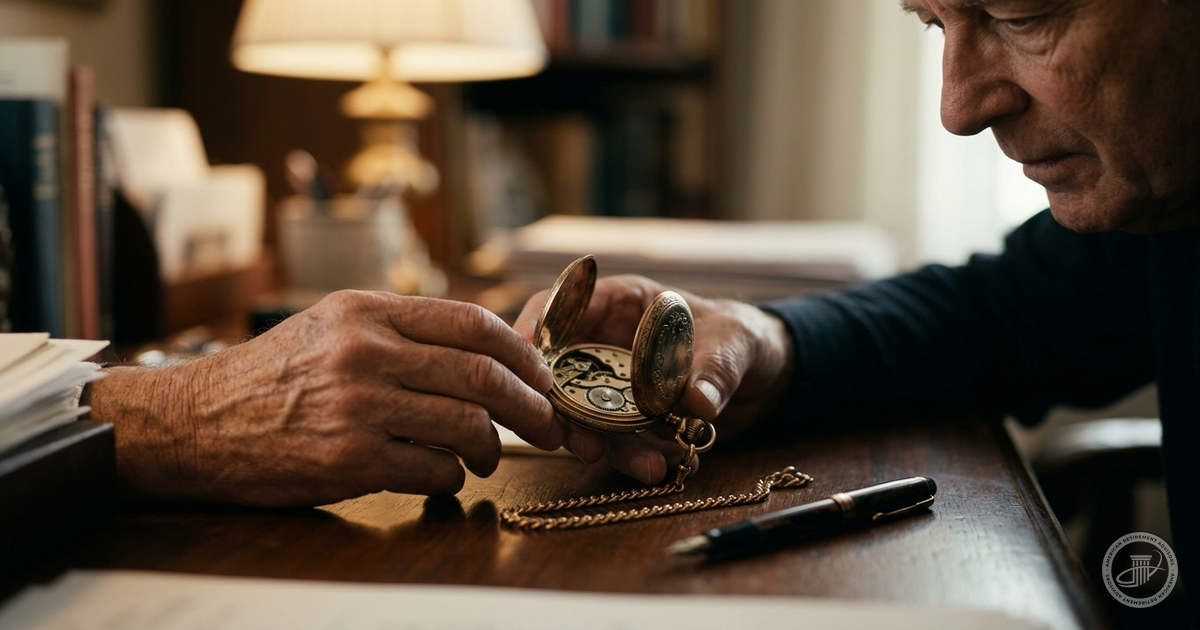
The most important prop on the Fiscal Fridays stage is about two inches across. It is an 1878 Rockford pocket watch, American-made, and it belongs to David Schaeffer. When an advisor starts answering a lightning-round card, David is watching that watch, and at thirty seconds the buzzer is not far behind.
If you follow David, you know he never shows up without a good watch and a better story. He collects American railroad watches, and the story behind them is one of the best history lessons I know about why precision matters.
Why did America need a watch it could trust?
Because for most of the 1800s, nobody agreed on what time it was. As the Library of Congress puts it, time "could be different depending on where it was measured and by whom." Every town set its clocks by the sun, and every railroad ran on its own time.
The railroads fixed it themselves. On November 18, 1883, they switched to five standard time zones, and every railroad clock was reset, including the ones that had already passed noon. That is why it is remembered as the Day of Two Noons. Congress did not make standard time federal law until the Standard Time Act of March 19, 1918.
What happened at Kipton?
On April 18, 1891, near Kipton, Ohio, about 40 miles west of Cleveland, a fast mail train collided with the Toledo Express. According to the Smithsonian's National Postal Museum, nine men were killed, six of them postal clerks. The investigation centered on the engineer's watches, one of which was possibly four minutes slow. As the museum puts it, "A mere four minutes was the difference between life and death on the line."
The railroad asked a Cleveland jeweler named Webb Ball to investigate how it kept time. His work led to watch performance and inspection standards in 1893.
How accurate did a railroad watch have to be?
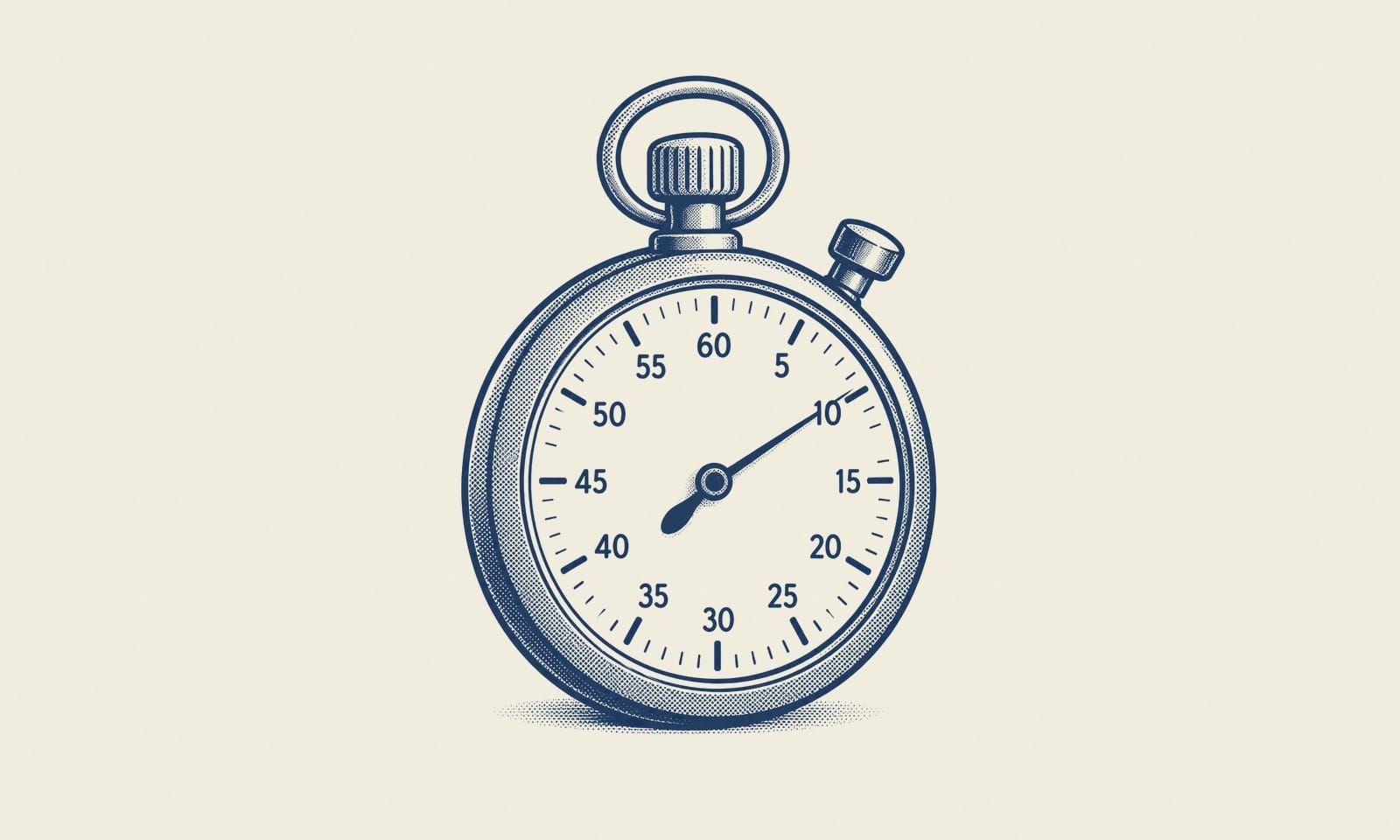
Very. Under the standards that followed Kipton, a railroad watch could be off by no more than 30 seconds a week, and a watch that missed the mark had to be readjusted and inspected again. American companies built watches to meet that bar. David's 1878 Rockford is older than the standards themselves, which makes its new job, keeping advisors honest, a kind of promotion.
Thirty seconds a week for a railroad watch. Thirty seconds a card for an advisor. We like the symmetry.
Why do the watch and the pen matter to a money show?
Because David uses them to make a point about value. In one of his short videos, he holds up two pens and says, "There is the Bic answer and then there's the Montblanc answer." Both pens write. One of them makes you feel different. A lot of retirement decisions work the same way: the cheap answer and the right answer are not always the same answer, and knowing which one you are buying is half the job.
David and Thea recently visited the Montblanc workshops and the watchmakers of Glashütte, a small town in Germany that has built watches by hand for generations. He has promised the whole story, with pictures, in the November newsletter.
Who gets the watches?
This is the part that matters for your family. Most households have a drawer somewhere with a watch, a ring, or a pen that has a story attached. The money in a retirement account has a beneficiary form. The watch usually has nothing but a memory, and memories do not settle estates.
In Arizona, the law gives you a simple tool for this. Under Arizona Revised Statutes 14-2513, a will may refer to a separate written list that gives away items of tangible personal property, like a watch or a ring, other than money. The list has to be in your handwriting or signed by you, and it has to describe the items and the people "with reasonable certainty." It can be written before or after the will, and you can change it later. Nevada and other states have their own rules, so ask your estate attorney how it works where you live.
And while you are making the list, write down the story. Who wore it, where it came from, why it matters. A watch with a story is an heirloom. A watch without one is just a watch.
Will the watch be there on October 23?
It will. The 1878 Rockford times the lightning round at Fiscal Fridays on Friday, October 23, at 10:30 AM Arizona time, in our studio in Scottsdale, and we have a secret guest, a Medicare health plan executive, sitting down with David. Doors open at 10:00 for coffee, and there are twenty seats.
Save your seat here, or call (602) 281-3898 and we will hold one for you.
Fiscal Fridays is an educational show. Educational content, not tax or legal advice. Not affiliated with or endorsed by the federal government or the federal Medicare program.
Disclaimer: The information in this article is for educational purposes only and does not constitute tax, legal, or investment advice. Tax laws change frequently, and individual circumstances vary. American Retirement Advisors does not provide tax or legal services. Before making any tax-related decisions, consult a qualified CPA, tax attorney, or financial planner who can evaluate your specific situation.