It's easy to believe that once you have a trust, everything is taken care of.
On the October Fiscal Fridays, my dad took that belief on. A trust, he said, is about ten percent of inheritance planning. Then he asked the room when they had last sat down with their kids and talked it through. His guess: "everybody's thought about it but never did it."
He called that conversation the family meeting. I grew up watching my dad help families, and I hear his point as good news. If you have a trust, an important piece of the paperwork is done. What's left is a conversation, and the easiest day to have it is already on the calendar.
Isn't having a trust enough?
A trust is an important piece, but it's one piece, about ten percent of the job in my dad's words. The rest is whether anybody knows the trust exists, where it's kept, and what you actually want, not just what the documents say. An attorney drafts the documents. The family meeting makes sure your family knows they exist and that they work.
If you're 65 or older, you're likely ahead on the paperwork. In a 2021 Gallup poll, just over three-quarters of Americans 65 and older said they have a will. That's a great start. The conversation is the next step.
There's often a gap inside the marriage, too. In a lot of couples, one spouse handles all of it and the other has never actually seen it. That gap is exactly what the family meeting exists to close.
Why is Thanksgiving the easiest day for it?
Because everyone is already there. This year Thanksgiving is Thursday, November 26, and for most families it's the one day of the year when everyone who would need to be part of this conversation is in the same house. Nothing to schedule. It doesn't have to be a two hour meeting, either. Twenty minutes after the meal can be enough.
Before you sit down:
- Invite everyone, even the one who lives far away. They can join by video. Leaving someone out is one of the easiest ways for these meetings to go wrong.
- Pick the moment. Not during the holiday meal. After dinner, or the next morning over coffee.
- You don't have to cover everything at once. Start one conversation.
- Bring your important papers, all in one place if you can. If you have a Beneficiary Box, bring the box.
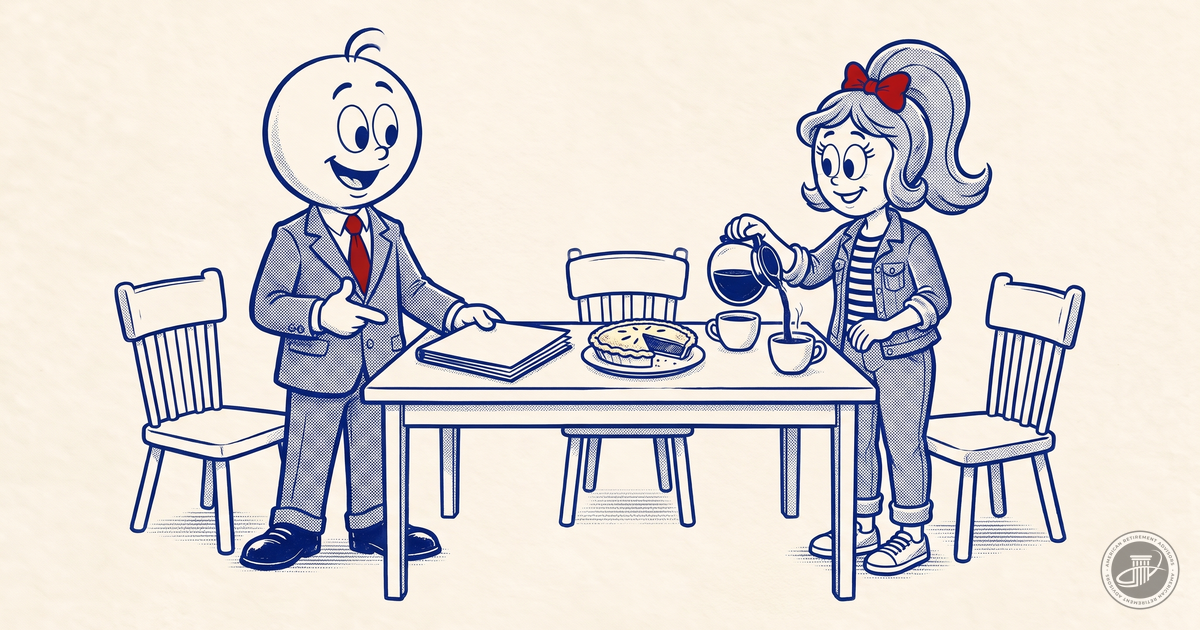
Picture it. The dishes are done, and somebody is going back for one more sliver of pie. You set a folder on the table and say, "Before you all head out, I want to show you something." That's a family meeting. It isn't legal work, and nobody signs anything. It's the conversation that makes the paperwork useful.
How does a family meeting go?
Five steps: open with why, show them where everything is, name your steward, start easy, and agree on what happens next.
- Open with why. Try this: "This has been on our minds. We've been getting our things in order, and we want to share what we've found and what we still need your help with. We wanted to do it while we're all together."
- Show them where everything is: the papers, the keys, and who has the combination. One box in one place is easiest. Wherever yours are, show them.
- Name your steward, the one person who will step in and coordinate for the family, and a backup. Then ask out loud, "Will you do it?" The steward is a family role, not a legal one.
- Start with the conversation that feels easiest. Start small: the passcode, the photos, the stories. Remember sitting on the couch with the photo albums? Do it again with a phone or iPad.
- Before anyone leaves, agree on what happens next. Write down what you decided and keep it with your papers.
If you only talk about three things:
- Where everything is, and who has the key or combination
- Your steward says yes
- Your phone passcode. That's where the photos are, and often the codes for everything else.
Do you have to tell your kids what you have?
No. You don't have to say a single dollar figure. A family meeting is about structure, not amounts: where things are, who the first calls go to, who does what, and what you actually want. The National Institute on Aging says it well in its checklist for getting your affairs in order: "You don't need to discuss your personal affairs, but someone you trust should know where to find your papers in case of an emergency."
That's also why organized papers still need the meeting. In The Beneficiary Box™ Program, families keep their important papers together in one place. But a box nobody knows about doesn't help anyone. The family meeting is when you show them where it lives.
What happens at Fiscal Fridays on November 20?
Fiscal Fridays is my dad's live monthly show at the American Retirement Advisors studio in Scottsdale. It's an educational talk show, and this month's theme is the family meeting. It's Friday, November 20, six days before Thanksgiving. Doors open at 10:00 AM Arizona time for coffee, and the show starts at 10:30 AM Arizona time. A seat, a coffee and the family meeting guide are waiting for every guest, at no cost.
The show warms up with five questions anyone can ask at a table: Who taught you about money? What did they get right? What did they get wrong? Do you know where your parents keep their important documents? Do your kids know where yours are?
The advisors answer real family questions out loud on a thirty second clock, with a buzzer and a spray bottle on the desk. After the show, they stay in their chairs and take questions from the room. You can save a seat on the Fiscal Fridays page.
My dad's guess is that everybody has thought about this. This Thanksgiving could be the year your family actually does it.
Facts checked November 9, 2026: National Institute on Aging and Gallup on wills (2021). For education only. Not legal or tax advice.
Disclaimer: The information in this article is for educational purposes only and does not constitute tax, legal, or investment advice. Tax laws change frequently, and individual circumstances vary. American Retirement Advisors does not provide tax or legal services. Before making any tax-related decisions, consult a qualified CPA, tax attorney, or financial planner who can evaluate your specific situation.