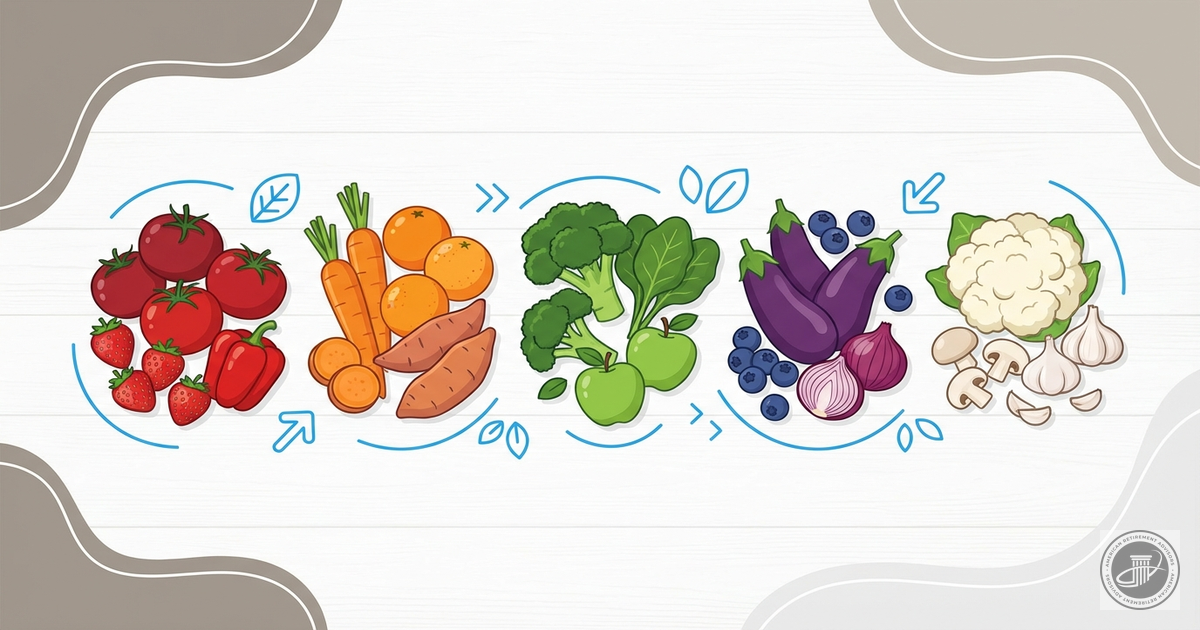
There are 'delicious' health benefits with a fruit and vegetable-rich diet. They are also a great source of fiber for helping the digestive system process the food we eat. Did you know the colors of your fruits and vegetables dictate their importance too?
RED: Reds slow down aging, keep brains healthy, help fight heart diseases, and guard against diabetes. (Watermelons, strawberries, cherries, tomatoes, red peppers, and red onions.)
ORANGE & YELLOW: Great for lowering bad cholesterol and blood pressure, keeping joints healthy, reducing prostate problems, and are great immunity boosters. (Oranges, grapefruit, lemons, bananas, carrots, sweet potatoes, pumpkin, and corn.)
GREEN: They keep the digestive tract healthy, bones and teeth strong, reduce risks of some cancers, and improve the immune system. Dark green, leafy veggies have the highest concentration of antioxidants and fiber. (Green apples, artichokes, arugula, asparagus, honeydew, and pears.)
WHITE: They help protect you from strokes and heart disease, lower blood pressure, and reduce the risk of certain colon, breast, and prostate cancers. (Garlic, ginger, mushrooms, onions, white corn, turnips, and white peaches.)
PURPLE & BLUE: They're immune system boosters, keep the eyes healthy (especially the retina), help the gastrointestinal tract, and help reduce body inflammations. (Eggplant, cabbage, endives, plums, and blueberries.)
Mom knew what she was talking about when she made you eat all your vegetables. Right?
By Sharon Groves
Sharon Groves covers health, wellness, and lifestyle topics for the ARA newsletter, helping readers make informed decisions about their wellbeing in retirement.
You Might Also Like
- Awe...Nuts! The Health Benefits of Peanut Butter
Lifestyle & Mindset · Sharon Groves - Simple Daily Habits to Improve Your Longevity in Your 60s, 70s, and 80s
Lifestyle & Mindset · Sharon Groves - Protein and Vitamin D: The Dream Team for Strong Bones and Better Health
Lifestyle & Mindset · Sharon Groves
Easy Eddie's Take
Sharon's colorful approach to nutrition is especially important as we age. Here's the good news: you don't need to overhaul your entire diet overnight. Think of it this way: every time you're at the grocery store, just try to add one more color to your cart than usual. Most people are surprised when they learn this, but Medicare Part B actually covers nutrition counseling sessions with registered dietitians if you have diabetes, kidney disease, or other qualifying conditions through the Centers for Medicare & Medicaid Services.
A lot of folks ask me, "How can I afford to eat healthier on a fixed retirement income?" The answer is simpler than you might think. Those antioxidant-rich purple and blue foods Sharon mentioned, like frozen blueberries and seasonal eggplant, often cost less than processed alternatives and can help reduce healthcare costs down the road. Arizona retirees have great access to fresh produce year-round, especially those orange and yellow citrus fruits that boost immunity during our mild winters.
A little preparation today can make a big difference tomorrow, and your future self will thank you for every colorful meal.