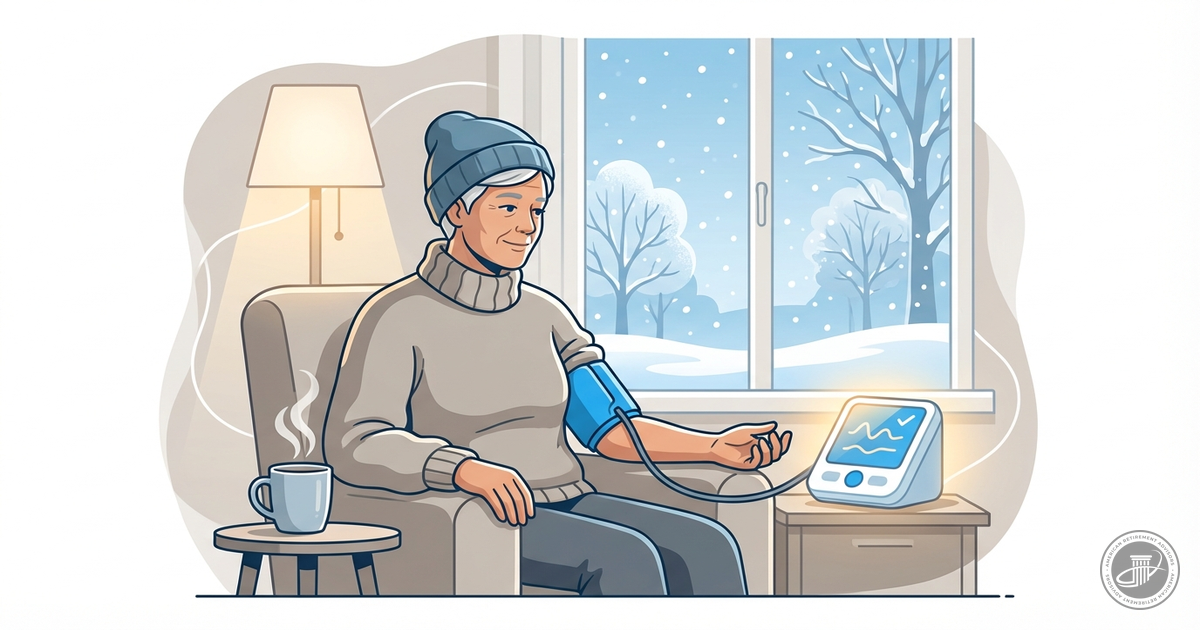
When the temperature drops, your blood vessels tighten up to keep you warm - but that also means your blood pressure can rise. This extra pressure makes your heart work harder and can increase the risk of things like heart attacks and strokes.
And it's not just the cold itself. Winter often brings other habits that can bump up your blood pressure, like eating heavier comfort foods or doing strenuous chores such as shoveling snow.
You might notice higher readings when you check your blood pressure in the winter. That's usually not a sign that your health is changing, it's just your body reacting to the cold. When blood vessels narrow, your heart needs to pump harder to keep blood flowing, which shows up as a higher number on the monitor.
If cold weather tends to raise your blood pressure, a few simple habits can help keep it steady:
- Layer up so you stay warm and reduce the stress cold puts on your body.
- Cover your skin: hats, scarves, gloves, the works. Every bit helps.
- Ease into the cold by spending short periods outside before diving into outdoor chores.
- Take it slow when doing physical tasks like shoveling snow. If you have to be active in the cold, don't rush. Give yourself breaks and move at a comfortable pace.
- Sip warm beverages like tea, coffee, or hot water with lemon. It helps keep you comfortable and supports circulation in chilly weather.
A little attention to staying warm can go a long way in keeping your blood pressure where it should be.
By Sharon Groves
Sharon Groves covers health, wellness, and lifestyle topics for the ARA newsletter, helping readers make informed decisions about their wellbeing in retirement.
You Might Also Like
- Over-the-Counter Hearing Aids: No Prescription Required
Medicare & Healthcare · Sharon Groves - What is Low T? Understanding Testosterone Deficiency in Men and Women
Medicare & Healthcare · Sharon Groves - Jeepers Creepers: Protecting Your Eyes in Retirement
Medicare & Healthcare · Sharon Groves
Easy Eddie's Take
Sharon's tips about winter blood pressure are especially important for folks in their 60s and beyond. Here's the good news: most people are surprised when they learn that these seasonal blood pressure changes are completely normal and manageable. The American Heart Association considers blood pressure readings of 130/80 or higher as hypertension, but temporary winter spikes don't automatically mean you need medication changes.
One question that comes up all the time is whether Medicare Part B covers blood pressure monitoring at home. It does cover the devices when prescribed by your doctor, and many Medicare Advantage plans in Arizona include additional wellness benefits like gym memberships that can help with year-round blood pressure management. If you're checking your blood pressure at home this winter and seeing those higher numbers Sharon mentioned, keep a log to share with your doctor at your next visit.
Think of it this way: your body is doing exactly what it's designed to do when temperatures drop. Once you understand what's happening, staying on top of it becomes much easier.